Big Hollywood Hates This Coffee Cup
A small coffee-cup test points toward a more directed way to make AI video.
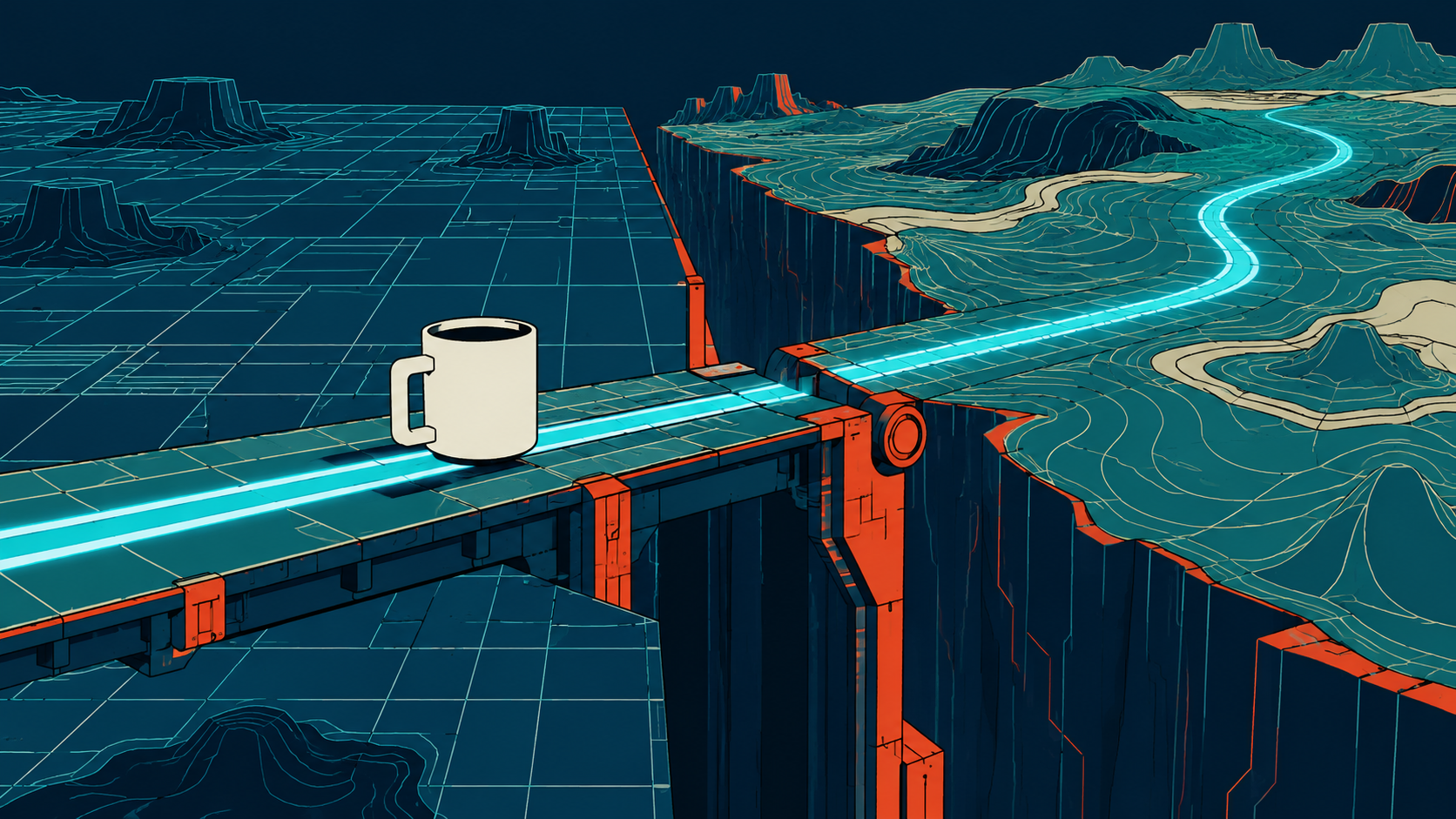
Big Hollywood probably does not hate this coffee cup.
But it may dislike what the coffee cup represents.
The test is simple. A woman is sitting in a chair. A cup is on the table. She reaches for the handle, takes a drink, and puts the cup back down.
That is not much of a movie.
It is enough of a scene to expose the difference between asking an AI model for a video and directing one.
With a prompt alone, the model has to decide everything. It has to invent the room, the person, the camera, the movement, the cup, the hand, and the physics. It can produce something that looks good in a still frame while failing at the actual action. The cup may appear twice. The hand may pass through it. The wrist may turn in a way that no wrist should turn.
So I tried starting somewhere else.
Before generating the realistic video, I made a simple 3D version of the scene. Nothing beautiful. Just the chair, the table, the cup, and the movement. The cup has a starting position. The hand reaches for the handle. The rim reaches the mouth. The cup returns to the table.
Then the AI model turns that direction into footage.
The 3D scene is not the movie. It is closer to blocking: a rough statement of what happens, when it happens, and where the camera needs to be. When the movement is wrong, the scene can be changed and rendered again. The model is no longer being asked to invent every decision from a sentence.
The test is still rough
The result is not ready to stand beside a finished film. There are artifacts. The person is not an actor. The cup does not have the weight and subtlety it would have in a live-action shot.
But it also does not feel like the usual AI-video clip where everything is plausible until you look closely. The action has a beginning, a middle, and an end. The person and the object are in a scene with rules.
That is the part that interests me.
Direction before generation
There is a future version of this where someone can work out a story scene by scene without first needing a crew, a location, a camera package, or permission from someone who controls a large production budget.
They will still need taste. They will still need to understand a story, a moment, and an audience. They will still need to decide why the scene exists at all.
The technology does not do that work for them.
What it may do is make the practical act of directing more available. A person with a story could build a scene, adjust it, make a mistake, try again, and eventually make something worth watching.
That is a much more interesting possibility than an endless feed of AI clips.
For now, it starts with a coffee cup.